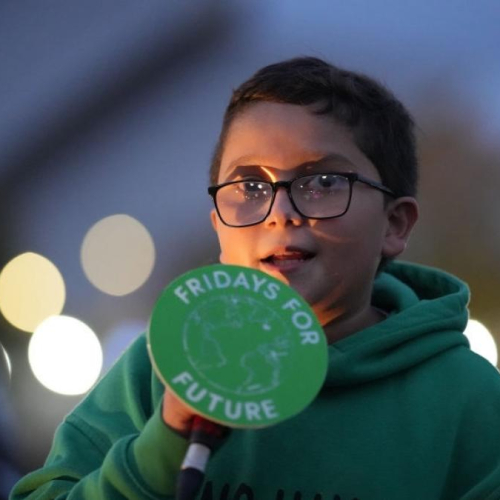
This post was written by Francisco Vera Manzanares, 16, a human rights defender and climate activist from Colombia. You can find out more about Francisco’s work on his website: https://franciscoactivista.com/francisco-vera/
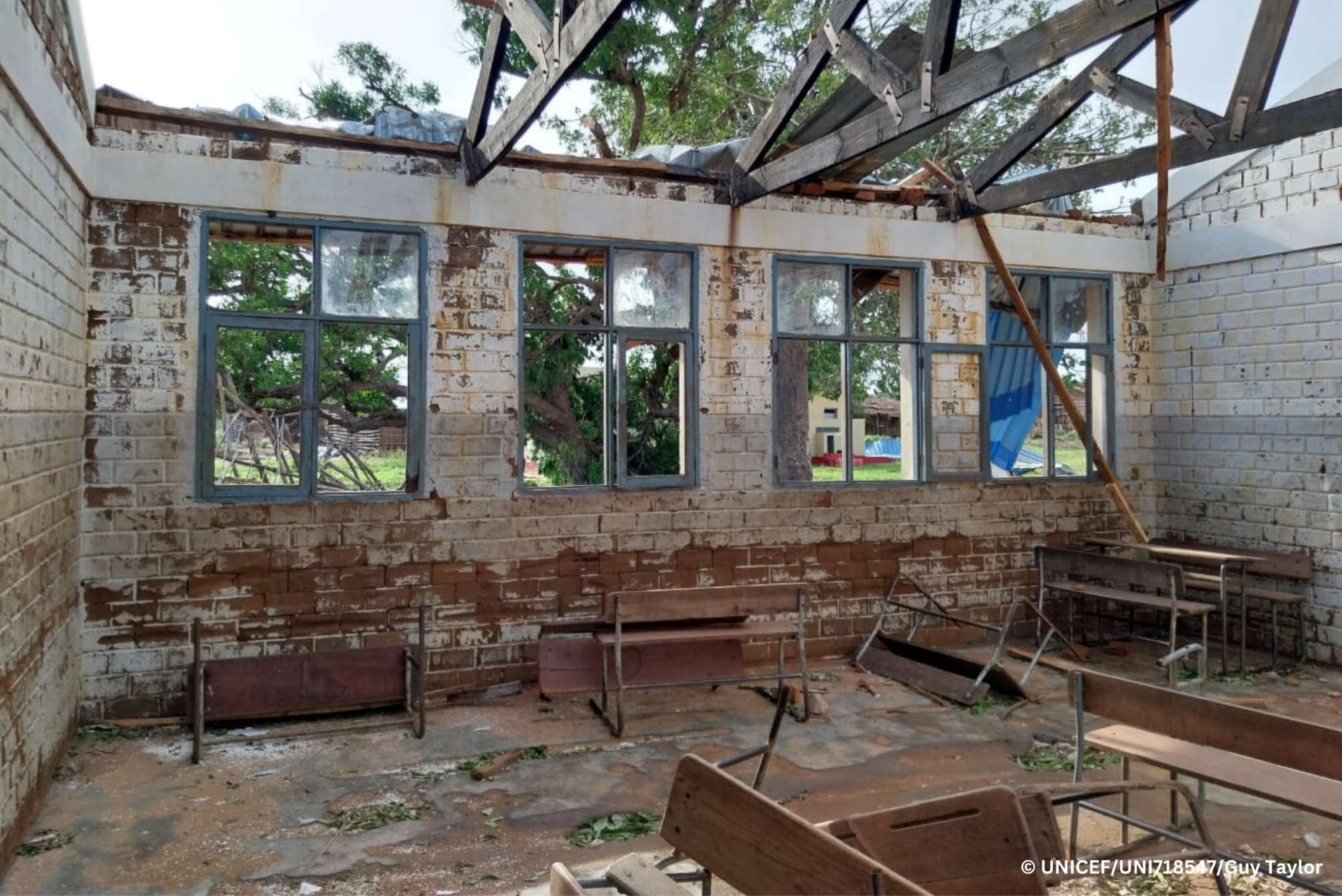
In a village nestled in the green mountains of the Colombian Andes, when I was nine years old, I saw terrible news on television from the Amazon where the rainforest was increasingly at risk. This was in 2019, just before the pandemic, and I remember that in many places, the spark of activism and climate mobilisation had already begun to ignite — a flame that was becoming unstoppable. Young people around the world were taking to the streets to demand climate justice from their states and governments – not least because of the huge toll the emergency was taking on access to education. The climate crisis was no longer a distant possibility: it was, and still is, an imminent reality threatening our communities. Faced with this, we have no choice but to organise for a common and intergenerational cause: the well-being of ecosystems and, as a consequence, of our own species.
In that context, I founded Guardians for Life, a movement of children and adolescents in Colombia that has since led grassroots initiatives with a focus on children’s rights. Among our actions are the eco-hope gardens and various projects on climate, civic and environmental education in our network of schools. While we act locally, we have also come to understand the importance of driving systemic change.
That’s why we decided to engage in political advocacy. We believe that to achieve tangible transformations in our communities, we must go beyond the individual and start building collective power. We came together and created a manifesto with clear and consistent proposals aimed at decision-makers. This manifesto has been endorsed by over 5,000 children and has been presented to various heads of state, UN agency representatives, and even to Secretary-General António Guterres himself. Our goal: to raise the banner of climate justice as a struggle intrinsically tied to intergenerational equity.
The Declaration has been a long and fruitful process led by children and guided by the concept of eco-hope: a vision that does not deny the gravity or complexity of the current situation but seeks to transform it. We believe that deep paradigm and policy changes are necessary to build fairer and more sustainable societies. On this path, designing a fair and equitable financing model is a fundamental step, as stated by the UN Committee on the Rights of the Child in its General Comment No. 26, for which I served as a child advisor.
Children are the ones who suffer the most from the consequences of the current climate crisis. Yet, paradoxically, their voices remain virtually invisible in the spaces where key decisions are made. According to UNICEF, only 2.4% of multilateral climate funds directly involve children, even though, for example, 80% of diseases worsened by this crisis mainly affect children under the age of five. It is also important to emphasise that the climate crisis is also an education crisis. Globally, a staggering 242 million students experienced school disruptions due to climate events in 2024. Furthermore, children who are displaced or otherwise affected by emergencies face huge barriers to access quality schools – more than 88 million boys and girls in crisis areas were out of school in 2024. At the same time, education is one of the best tools we have to fight the claime crisis: teaching children early about the dangers of rising temperatures and how to address this helps families, communities and the world as a whole.
We have declared an open and direct war on life and children. This is reflected not only in armed conflicts — where their lives are endangered with impunity — but also in the structural factors that generate instability and violations of rights, such as the climate crisis and the lack of access to education.
As global citizens, we have an ethical and moral responsibility: we cannot remain silent, because silence makes us complicit. We must raise our voices loudly to demand an end to violence and the full guarantee of children’s rights.
This is not only about what is being done, but also about what is being neglected. By not investing in concrete responses or in clear funding pathways, we are failing in our duty. And by investing our resources in producing weapons that end up targeting children, we are condemning them to oblivion.
Violence is also manifested through the climate crisis and through the negligence of many social and institutional actors. But the root problem is deeper: it is a systemic model that silences and minimises the voices of children. This model has a name: adultcentrism.
It is no coincidence that, around the world, children’s voices are the most ignored, sidelined and neglected. Fighting adultcentrism also means confronting other oppressive structures, such as colonialism and gender-based violence. This change must be reflected in financing, in public policies, and in concrete and accessible mechanisms that guarantee children’s effective participation.
Children should not be seen as mere passive beneficiaries of climate resilience projects. They must be protagonists, leaders, and agents of transformation in their communities. Climate financing represents a historic opportunity to recognise, empower, and prioritise their leadership and their voices everywhere, where schools can provide unmatched reach into communities.
In this sense, education is the best tool we have to tackle the climate crisis, prevent discrimination and ensure the comprehensive development of children. Going to school, in the current context of forced migration and emergencies caused by the climate crisis, has become a privilege and a distant dream for millions of children. We must put all our collective efforts into ensuring that climate and environmental education is guaranteed as a fundamental right for all children and as a catalyst for change and Peace.