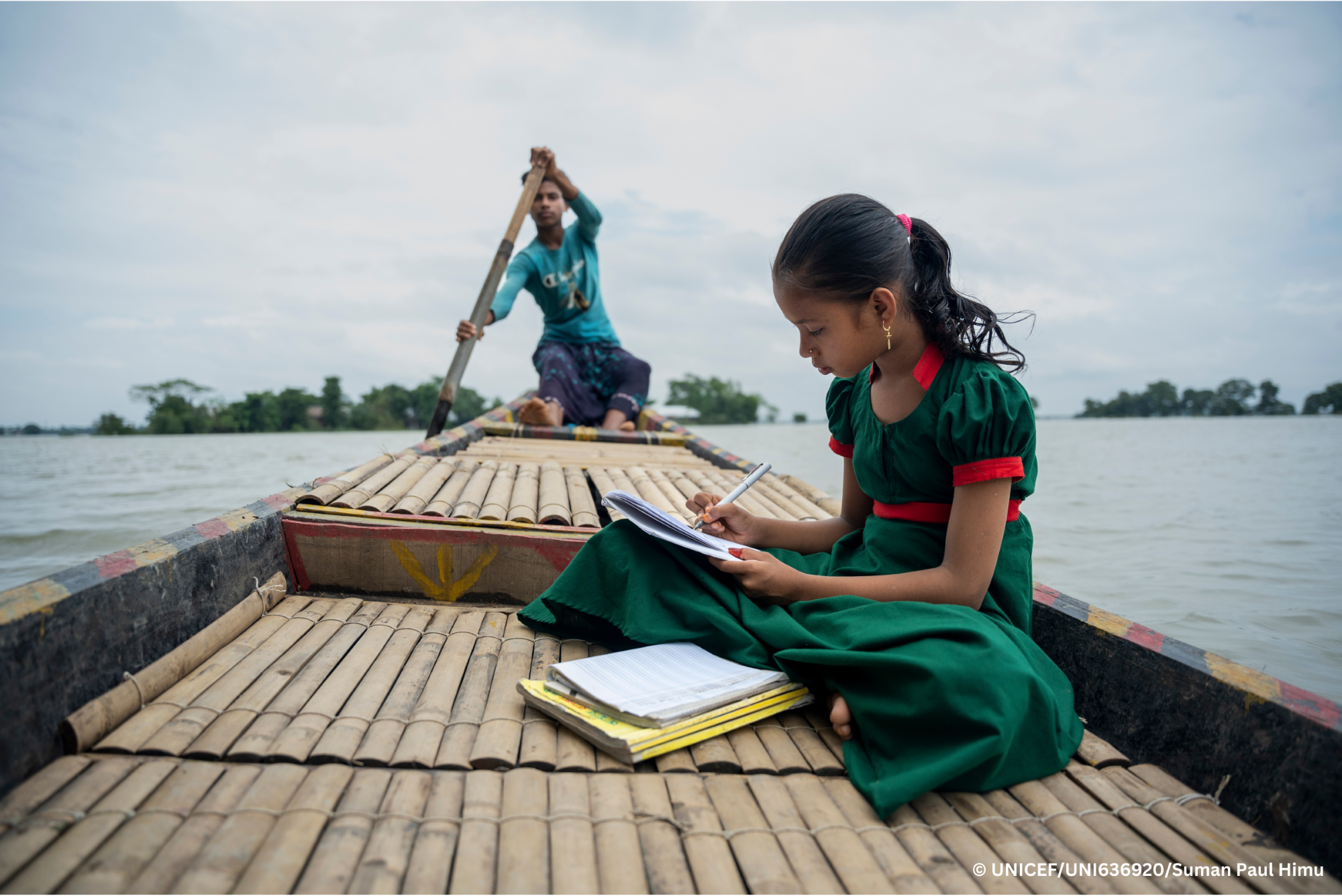
As a new climate fund takes shape, investing in education for all children and youth, including in climate-vulnerable and crisis-affected countries, is key to building resilience and supporting recovery.
No-one is immune to climate change, but crisis-affected children and youth caught in armed conflict, violence, forced displacement and other emergencies are by far losing out the most.
Globally, a staggering 242 million students experienced school disruptions due to climate events in 2024, and the loss of school infrastructure is alarming. Meanwhile, education remains massively overlooked in climate financing – a mere 1.5% of climate finance went to the education sector in 2021. Moreover, just 2.4% of climate finance supported child-responsive activities between 2006 and 2023.

In the face of this challenge, the Geneva Global Hub for Education in Emergencies (EiE Hub) has delivered an important message to the Executive Director and the Board members of the Fund for Responding to Loss and Damage (FRLD). It highlights both the vulnerability of education to climate change and its critical role in the response to the climate emergency, while also calling on the FRLD to prioritise education for all children and youth in its allocations. The factsheet outlines how investments in education projects align with the fund’s objectives, and makes concrete recommendations on how to integrate education into the climate response.
To read the factsheet:

To read the accompanying letter to the FRLD Executive Director and Board members:
In the recommendations to address and prevent loss and damage in the Education sector, the FRLD is called to:
- Prioritise education for all children and youth, including in climate-vulnerable and crisis-affected countries, in funding allocations, by establishing education as a core priority area within the FRLD’s investment framework.
- Ensure that FRLD finance enables immediate continuity of safe and inclusive education for children and youth following a sudden-onset and slow-onset event, as well as building long-term resilience of education systems to avert and minimise loss and damage.
- Ensure that children and youth, including from climate-vulnerable and crisis-affected countries, are meaningfully engaged in loss and damage and FRLD policy development.
- Work jointly with the UNFCCC and other relevant institutions to commission and release a “loss and damage finance gap report”. This report will present the financing gap that the FRLD will close, particularly in sectors directly concerned by climate-related loss and damage, including in the education sector.
Education is one of the most powerful tools to solve the climate crisis, driving climate action. It shapes mindsets, behaviours, skills and innovation, which are key to mitigation and adaptation. It strengthens adaptability, gender equality and resilience, fostering democracy, trust and inclusion. Education empowers generations to come to adapt to and mitigate the impacts of climate change.


