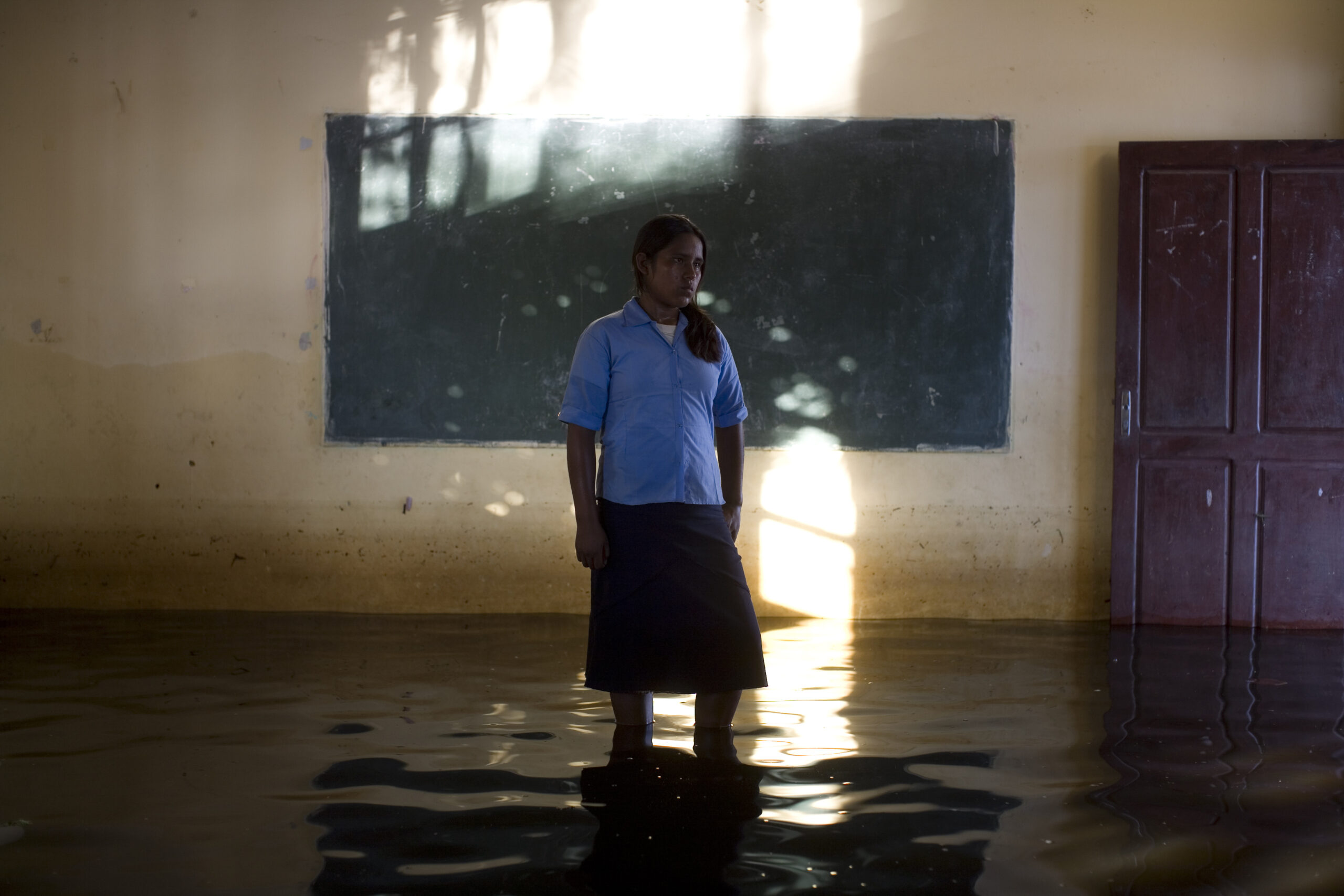
On Thursday, 10 July 2025, the Geneva Global Hub for Education in Emergencies (EiE Hub) co-sponsored an expert-level briefing to highlight findings from its latest Flagship Report, Acting Ahead to Protect Education Investments in New York City. The event was attended by diplomats and actors in the humanitarian, development, peace, climate and education sectors, and co-sponsored by UNICEF as well the Permanent Missions of Colombia and Switzerland to the UN (the latter of which also hosted the discussion).
During his opening remarks, Gautam Narasimhan, Senior Adviser for Sustainability and Climate in Education with UNICEF, stressed how acting ahead before crises in education is both cost-effective, and can help children and young people stay in school when disaster strikes. He also stressed the value of the school itself as a crisis response institution, since it is already embedded in communities, and teachers play critical roles as natural early warning networks and community mobilisers.
Petra Heusser, Executive Director of the EiE Hub, then presented an overview of the main findings of the report, as well as the seven key recommendations it presented to donors, governments and aid practitioners. These include the need to prioritise investment in anticipatory approaches across sectors, including education, and systematically integrating education into broader anticipatory frameworks.
During the ensuing discussion, those in attendance drew on their own experience to both raise questions and highlight how acting ahead can support Education in Emergencies. Participants also highlighted broader concerns about the effects on the education sector amid the unprecedented donor cuts that have affected the sector this year. Recent analysis from the Global Education Cluster, for example, highlighted how humanitarians have had to reduce funding requests from donors for Education in Emergencies by 33%.
The event further touched on how anticipatory approaches could serve to protect education in conflict settings, in particular as attacks on schools and other learning facilities have risen alarmingly in recent years. In fact, one of the report’s key recommendations is to continue to strengthen preparedness efforts and, where feasible, expand anticipatory action to armed conflict and situations of violence, including by endorsing, implementing and reinforcing tools such as the Safe Schools Declaration and its associated Guidelines and the Comprehensive School Safety Framework.
The event closed with a renewed call to emphasise the urgent need for transformative, anticipatory approaches to protect education in crisis contexts and limit learning disruption. There is an urgent need to turn these insights into action, including through key upcoming events such as the UN General Assembly, COP30 and the International Safe Schools Declaration Conference.


